The Rhythm the Body Remembers: How India's Festival Calendar Offers a Cure for America's Restless Soul
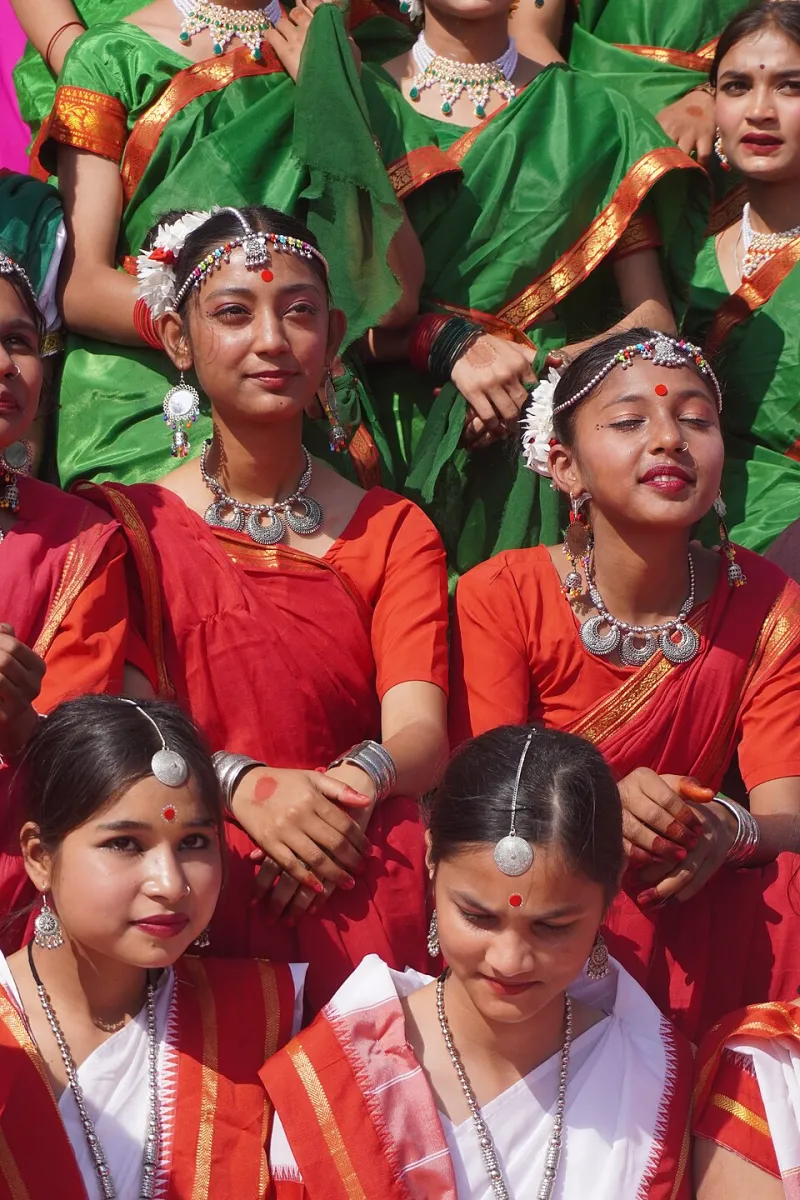
Photo: The open draft, CC BY-SA 4.0, via Wikimedia Commons
Look at the average American calendar and you will find a document organized almost entirely around output. Deadlines, deliverables, quarterly reviews, product launches. Even the holidays that remain — Thanksgiving compressed into a long weekend, New Year's Eve reduced to a single night of forced revelry — have been colonized by commerce or stripped of their contemplative dimension. What is largely absent from this calendar is what anthropologists call sacred time: moments deliberately set apart from ordinary productivity, designed not to accomplish anything but to restore the human being to a larger sense of meaning and belonging.
In India, the calendar has always operated differently. From Diwali and Navratri to Holi, Pongal, Onam, and dozens of regional observances, the Indian year is punctuated by festivals that serve as intentional interruptions — moments when communities are collectively invited to pause, reflect, celebrate, and renew. These are not vacations. They are not escapes. They are, in the truest sense, recalibrations: scheduled encounters with something larger than the individual self.
For Americans exhausted by a culture that has made rest feel like failure, the intelligence embedded in India's festival traditions may offer something genuinely transformative.
What a Festival Actually Does
It is tempting to view festivals as cultural decoration — colorful expressions of heritage that carry emotional but not practical significance. This view misunderstands their function entirely. Across cultures and centuries, festivals have served as psychological and neurological reset mechanisms, and modern science is beginning to illuminate why.
Research in chronobiology — the study of biological time — confirms that human beings are deeply rhythmic creatures. Our bodies operate on circadian cycles, ultradian cycles, and longer seasonal rhythms that regulate everything from cortisol production to immune function. When those rhythms are disrupted — as they routinely are in modern American life, where artificial light, round-the-clock connectivity, and the absence of seasonal ritual flatten the year into a uniform blur — the physiological consequences are measurable. Disrupted rhythm is associated with increased anxiety, impaired memory consolidation, and reduced emotional resilience.
Festivals, when understood through this lens, are not indulgences. They are biological necessities dressed in cultural clothing. They force a break in routine, activate communal bonding hormones like oxytocin, create shared emotional peaks that consolidate memory and meaning, and signal to the nervous system that the current cycle of effort is complete.
The Architecture of the Indian Festival Year
What makes India's festival calendar particularly sophisticated is not the sheer number of celebrations but their intentional distribution across the year. The festivals are not clustered arbitrarily. They are calibrated to the seasons, to agricultural rhythms, to astronomical events, and to the mythological narratives that give each community its sense of shared identity.
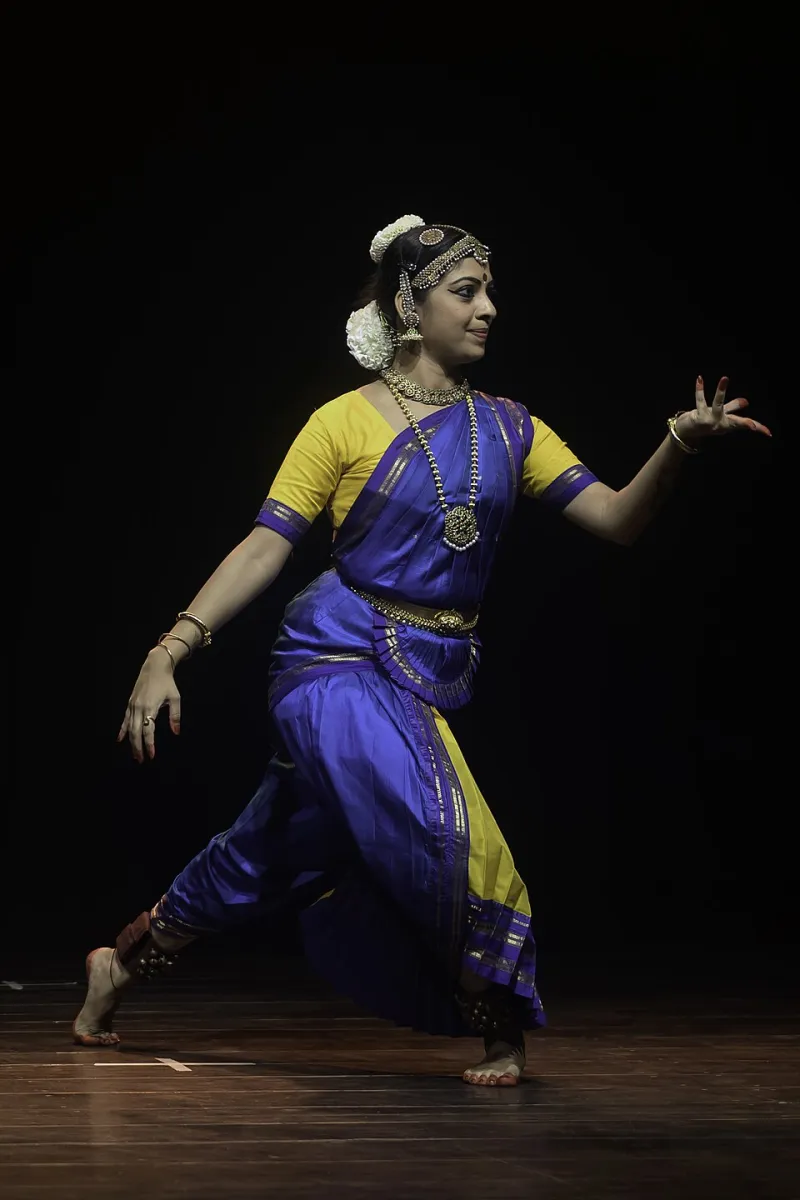
Navratri, for instance, arrives twice yearly — once in spring and once in autumn — at the precise moments when seasonal transition places the greatest demand on the body and spirit. It is a nine-night festival of devotion, dance, and fasting that functions simultaneously as a communal immune boost, a spiritual renewal, and a cultural reaffirmation. Diwali follows the darkest moon of late autumn, deliberately placing light and celebration at the moment when darkness is most pronounced. Holi arrives at the explosion of spring, channeling the body's natural restlessness and joy into communal play.
Each festival carries its own emotional signature — what Indian aesthetic theory would call a dominant rasa, or flavor of experience. Some festivals are solemn and introspective. Others are exuberantly joyful. Some involve fasting; others, feasting. Together, they create what might be called an emotional curriculum for the year — a structured journey through the full range of human experience, ensuring that no single mood or orientation dominates the psyche for too long.
America's Flattened Year
By contrast, the American calendar offers remarkably little in the way of genuine cyclical variation. The major cultural holidays — Christmas, Thanksgiving, the Fourth of July — are meaningful to many, but they are concentrated in certain seasons and largely oriented toward consumption, family obligation, or patriotic sentiment. They do not, as a rule, invite deep introspection, communal spiritual practice, or the kind of embodied celebration — dance, music, ritual, fasting — that India's festivals provide.
The result is what many psychologists and cultural critics have begun calling temporal monotony: the subjective experience that all weeks feel essentially the same, that the year lacks shape, and that there is nothing to look forward to except the next deliverable or the next vacation. This monotony is not merely uncomfortable. It is, accumulating evidence suggests, genuinely harmful. Studies on the psychology of anticipation show that having meaningful events to look forward to — events that carry emotional significance beyond leisure — is a reliable predictor of psychological well-being and life satisfaction.
Gajanan Maharaj's cultural teachings have long emphasized that the soul requires rhythm as surely as the body requires breath. A life without sacred pauses is not a more productive life; it is a diminished one.
Adopting Festival-Thinking in an American Context
This is not a call for Americans to appropriate Indian religious traditions wholesale or to perform rituals without cultural context. Rather, it is an invitation to extract the underlying intelligence of the festival model and apply it thoughtfully to American life.
That intelligence can be summarized in a few principles. First, the year should have shape — designated moments of heightened significance that differ qualitatively from ordinary time. Second, celebration should be communal rather than solitary; the neurological benefits of shared ritual are substantially greater than those of individual leisure. Third, festivals should engage the body as well as the mind — through music, movement, food, and sensory experience — because embodied celebration activates emotional processing in ways that intellectual reflection alone cannot. Fourth, some festivals should involve voluntary restraint — fasting, simplification, or withdrawal from ordinary pleasures — because contrast deepens appreciation and creates the psychological conditions for genuine renewal.
Practically, this might mean establishing a small number of personally or communally meaningful annual observances: a late-winter gathering centered on music and storytelling; a midsummer celebration of gratitude tied to the natural world; an autumn evening of reflection and shared light. The specific form matters less than the intention: to create genuine sacred pauses that the body and spirit can learn to anticipate, inhabit, and carry forward as memory.
The Return of Meaning
There is something quietly radical about insisting that the calendar should serve the soul as well as the economy. In a culture that has largely outsourced its sense of meaning to markets and metrics, the Indian festival tradition offers a different proposition: that human beings need not merely rest from their labors but genuinely celebrate the fact of being alive, of belonging to a community, of inhabiting a world that moves in cycles rather than straight lines.
The body already knows this. It remembers rhythm even when the culture has forgotten it. The restlessness so many Americans carry is not, at its root, the need for more productivity or more entertainment. It is the hunger for sacred time — for moments that mean something beyond their utility, for a calendar that honors the full complexity of what it means to be human.
India's festival wisdom, offered with cultural humility and genuine curiosity, may be precisely the invitation that the American soul has been waiting to receive.