The Nine Flavors of Being: How India's Ancient Theory of Rasa Can Transform America's Emotional Life
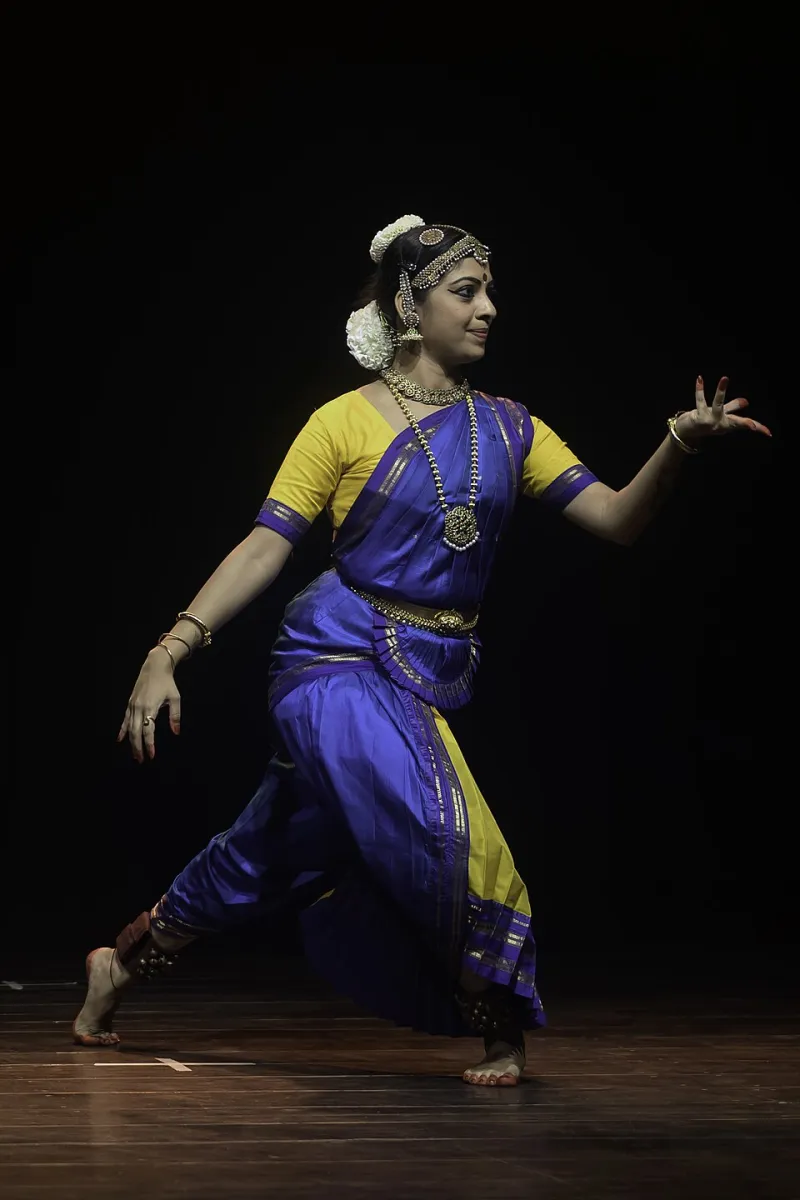
Photo: Bobinson, CC BY-SA 4.0, via Wikimedia Commons
A Different Kind of Emotional Intelligence
Ask most Americans how they are feeling, and the answer will likely occupy a narrow corridor. Fine. Stressed. Tired. Good. The vocabulary available to describe inner life has, for many people, contracted to a handful of socially acceptable states — those that signal productivity, positivity, or at least the appearance of being together.
This impoverishment is not accidental. It reflects a cultural relationship with emotion that has been shaped by centuries of particular influences: a Protestant suspicion of excessive feeling, a therapeutic tradition that pathologizes deviation from baseline wellness, and a social media environment that rewards the performance of curated contentment. The result, for many Americans, is a kind of emotional homelessness — the sense that large portions of one's inner life have nowhere legitimate to live.
India's classical aesthetic tradition offers something genuinely different. At its center is a concept called rasa — a Sanskrit word meaning, at its most literal, juice or essence — which articulates a framework for understanding emotion that is neither clinical nor dismissive, but profoundly, even reverently, attentive.
The Architecture of Rasa
The foundational text of rasa theory is the Natyashastra, a treatise on the performing arts attributed to the sage Bharata Muni and composed, by most scholarly estimates, somewhere between 200 BCE and 200 CE. Within its extensive treatment of drama, music, and dance, Bharata articulates a theory of emotional experience that has shaped Indian aesthetics for more than two millennia.
According to this theory, there are nine primary rasas — nine fundamental emotional essences that constitute the full range of human feeling. They are:
- Shringara — the rasa of love and beauty
- Hasya — the rasa of joy and laughter
- Karuna — the rasa of compassion and sorrow
- Raudra — the rasa of fury and intensity
- Vira — the rasa of courage and heroism
- Bhayanaka — the rasa of fear and awe
- Bibhatsa — the rasa of disgust and revulsion
- Adbhuta — the rasa of wonder and astonishment
- Shanta — the rasa of peace and equanimity
What is immediately striking about this taxonomy is its inclusivity. Fury, disgust, fear, and sorrow sit alongside love, joy, and peace as legitimate, even essential, dimensions of emotional experience. There is no hierarchy in which positive states are privileged above difficult ones. Each rasa is recognized as a flavor of being — something to be encountered, inhabited, and understood rather than managed or eliminated.
Beyond Toxic Positivity
The relevance of this framework to contemporary American life becomes apparent when one considers the cultural pressure toward relentless positivity that characterizes much of the country's public emotional discourse. From motivational culture to the wellness industry's emphasis on good vibes and high-frequency states, Americans are surrounded by implicit and explicit messages that difficult emotions are problems to be solved rather than experiences to be engaged.
The consequences are well-documented. Emotional suppression correlates with elevated stress, disrupted relationships, and diminished creative capacity. The inability to grieve fully, to experience legitimate anger, or to sit with the discomfort of fear without immediately reaching for distraction or reframing leaves people carrying unprocessed emotional weight that accumulates quietly over time.
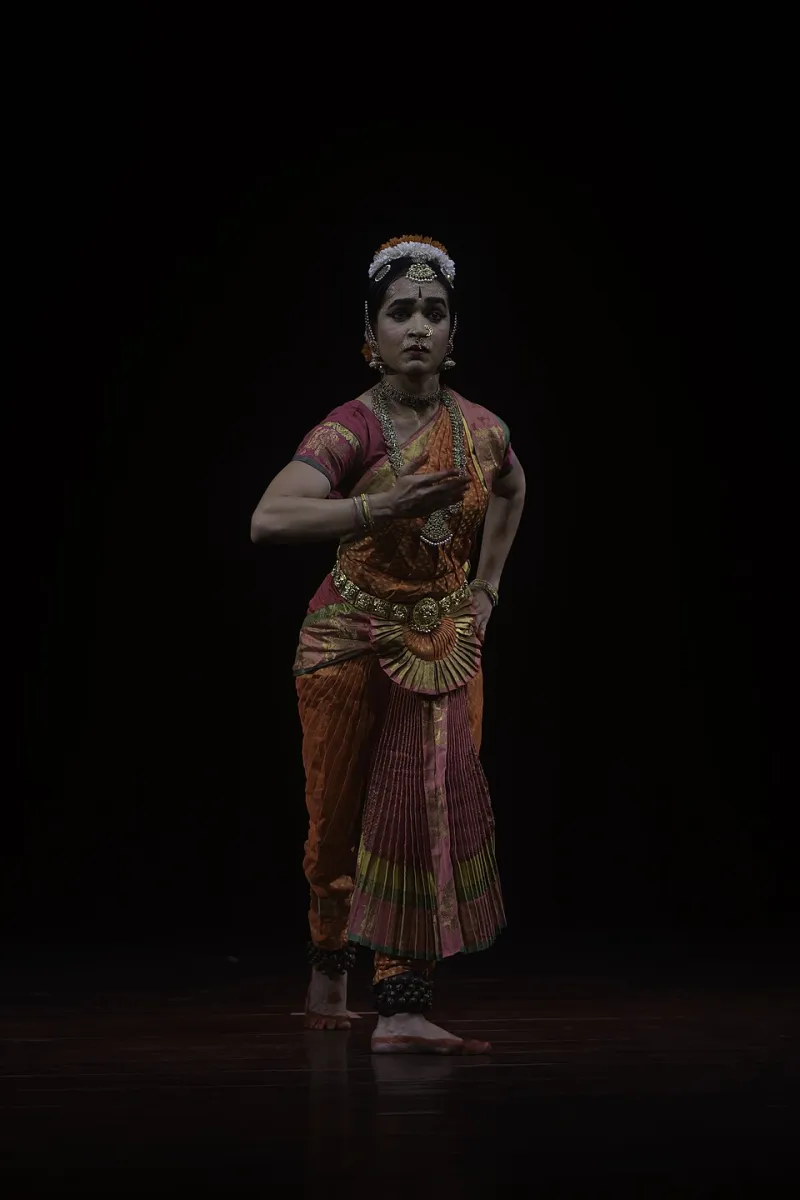
Rasa theory offers a corrective not by encouraging emotional indulgence, but by restoring legitimacy to the full spectrum of feeling. Within the classical performance traditions — Bharatanatyam, Kathak, Odissi, Kuchipudi — a trained artist does not merely portray emotion. She inhabits it, transmits it, and invites the audience into a shared experience of that emotional essence. The goal is not catharsis in the Aristotelian sense of purging, but rasanubhava — the tasting of emotional experience in a form that is both aesthetically refined and spiritually illuminating.
Rasa as Emotional Literacy
For Americans seeking a more honest relationship with their inner lives, the practical implications of rasa theory extend well beyond the performance stage.
First, rasa invites a vocabulary expansion. Rather than reducing complex emotional states to binary categories of positive and negative, the framework encourages specificity. Is what one is experiencing the sharp clarity of raudra, the aching openness of karuna, or the reverent stillness of bhayanaka in the face of something genuinely vast? Naming more precisely what is present creates distance from automatic reaction and opens space for genuine inquiry.
Second, rasa dissolves the implicit shame that often attaches to difficult emotions in American culture. Within the classical tradition, no rasa is considered unworthy of artistic attention. A master performer of bibhatsa — the rasa of revulsion — is not performing something lesser than one who embodies shringara. The full range of human feeling is understood as the raw material of both art and wisdom. Extending this perspective to one's own emotional life has the effect of reducing the self-judgment that so often compounds the original difficulty.
Third, and perhaps most significantly, rasa theory suggests that emotions are not merely personal events but participatory ones. When a classical dancer embodies karuna — grief, compassion, tenderness — she is not simply expressing her private feeling. She is invoking a universal emotional essence that the audience can recognize and share. This understanding repositions emotion from a purely individual experience to a connective one, which has profound implications for relationships, community, and the experience of belonging.
Cultivating Rasa in Everyday Life
One need not be a classical performer to begin applying rasa awareness. Several entry points are accessible to any sincere practitioner.
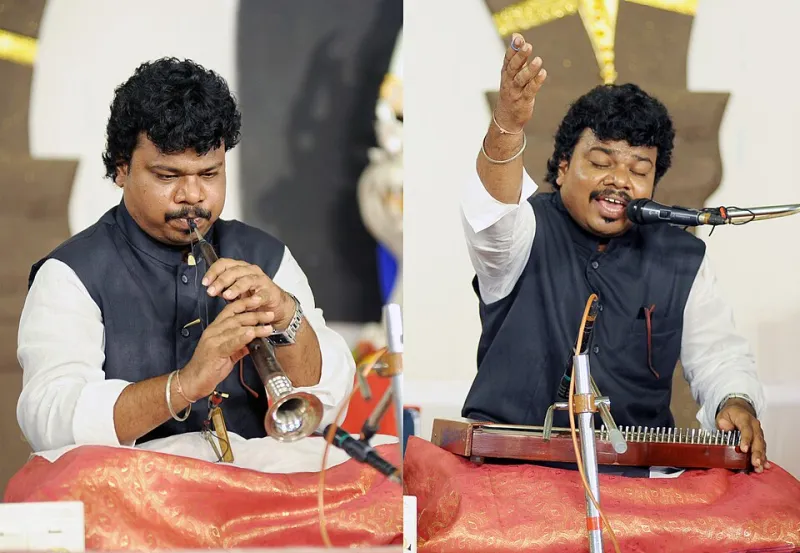
Attending live performances of Indian classical music or dance — available in most major American cities and increasingly online — offers an immediate and often visceral introduction to rasa as a living experience rather than an abstract concept. The transmission that occurs between a skilled performer and a receptive audience is itself a form of emotional education.
Keeping a rasa journal — noting not simply what happened in a given day but which emotional essence was most present, and observing how that essence moved and transformed — develops the kind of granular emotional awareness that rasa theory cultivates.
Perhaps most importantly, simply allowing difficult emotions their full presence — without immediate reframing, suppression, or the reach for distraction — begins to rebuild the emotional tolerance that toxic positivity has eroded. Grief, when genuinely met, does not destroy. Anger, when honestly acknowledged, does not consume. Fear, when faced rather than fled, very often reveals something instructive at its center.
An Invitation From an Ancient Stage
The Natyashastra opens with the observation that drama was created so that human beings could encounter the full truth of their experience in a form both beautiful and illuminating. That intention — to make the whole of human feeling available, honored, and understood — is one that American culture urgently needs.
Rasa does not ask Americans to become Indian, to adopt a tradition that is not their own, or to abandon the psychological tools that have genuine value. It asks only that the full spectrum of feeling be recognized as legitimate, that the difficult flavors of experience be met with the same attentiveness as the pleasurable ones, and that emotional life be approached not as a problem to be managed but as a richness to be inhabited.
In that invitation, there is something quietly revolutionary.