Sacred Stages, Global Screens: The Quiet Revolution of Indian Classical Arts in American Culture
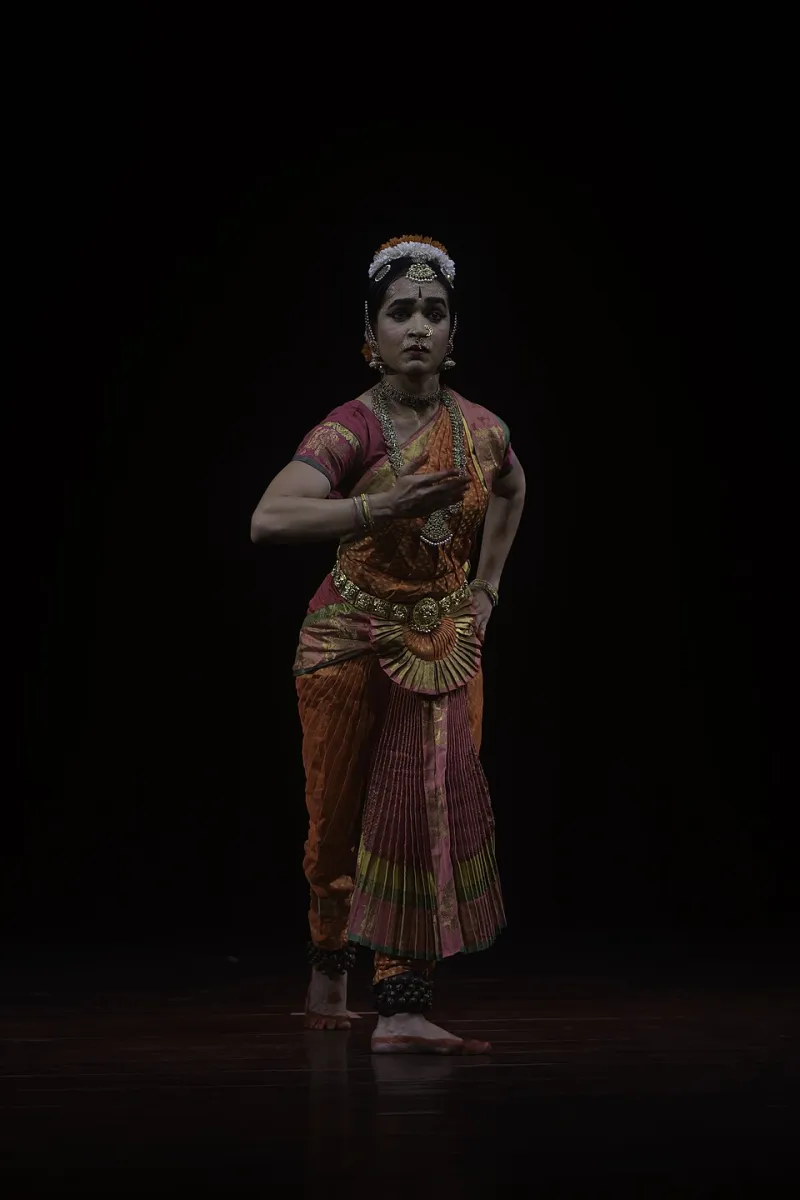
Photo: Bobinson, CC BY-SA 4.0, via Wikimedia Commons
There is a moment in a Bharatanatyam performance—somewhere between the precise geometry of a mudra and the thunderous descent of a dancer's heel—when time seems to reorganize itself. The audience, regardless of cultural background, feels it. Something ancient and entirely present simultaneously arrives in the room. That sensation, difficult to articulate but impossible to dismiss, may explain why Indian classical performing arts are experiencing an extraordinary renaissance in American cultural life.
This is not a trend manufactured by marketing departments. It is an organic cultural convergence, driven by artists of extraordinary discipline, audiences increasingly dissatisfied with the superficiality of mass-market entertainment, and a broader cultural appetite for what might be called authentic depth. At Gajanan Maharaj, the relationship between artistic expression and spiritual vitality has always been central to our identity. What is now unfolding across American stages and streaming platforms reflects something we have long understood: the sacred and the performative were never truly separate.
The Spiritual Architecture of Indian Classical Forms
To understand why these art forms are resonating with Western audiences, one must first appreciate what distinguishes them from purely secular entertainment. Indian classical performing arts—whether Bharatanatyam, Odissi, Kathak, Kuchipudi, Carnatic music, or Hindustani classical—were not originally conceived as entertainment. They were conceived as sadhana: spiritual practice, devotional offering, and a means of transmitting philosophical understanding through embodied form.
Bharatanatyam, for instance, traces its origins to the devadasi tradition of South India, in which temple dancers performed as an act of worship. The Natya Shastra, the foundational treatise on Indian dramaturgy attributed to the sage Bharata Muni and dating back at least two thousand years, describes the performing arts as a fifth Veda—accessible to all people, capable of communicating the full spectrum of human and divine experience.
The navarasas—nine fundamental emotional states including joy, sorrow, wonder, courage, and devotion—form the expressive vocabulary through which Indian classical performers communicate. A trained Bharatanatyam dancer does not merely move her hands; she inhabits and transmits emotional states with a precision that bypasses intellectual processing and speaks directly to the audience's inner experience.
This is precisely what contemporary American audiences, saturated with algorithmically optimized content designed to capture attention rather than deepen it, are increasingly seeking.
Broadway, Lincoln Center, and the Expanding Footprint
The presence of Indian classical traditions on America's most prestigious stages has grown considerably over the past decade. Productions incorporating Kathak vocabulary have appeared in experimental theater spaces from New York to San Francisco. Lincoln Center's programming has increasingly featured classical Indian artists not as exotic novelties but as major international performers deserving of serious critical engagement.
Choreographers such as Mythili Prakash—a Los Angeles-based Bharatanatyam artist and daughter of the legendary Viji Prakash—have brought rigorous classical training into dialogue with contemporary American themes, creating work that speaks fluently in both idioms without sacrificing the integrity of either. Her performances have drawn audiences who arrive knowing nothing of abhinaya or tala and leave transformed by the encounter.
Similarly, the Ragamala Music and Dance Theater, based in Minneapolis, has presented work at the Kennedy Center and other major American venues that fuses Bharatanatyam and Carnatic music into evening-length productions of genuine theatrical sophistication. Their 2019 production Sacred Earth was reviewed by major American publications with the kind of seriousness typically reserved for European classical performance.
These are not isolated incidents. They represent a sustained, accelerating integration.
Streaming Platforms and the Democratization of Classical Culture
If prestigious concert halls have served as the formal gateway for Indian classical arts into American cultural life, streaming platforms have blown the doors open entirely. YouTube channels dedicated to Carnatic and Hindustani classical music have accumulated subscriber bases in the hundreds of thousands, with listeners spanning continents and demographics. Platforms such as Spotify have developed dedicated playlists for Indian classical genres that regularly attract non-Indian listeners searching for music that rewards sustained attention.
Netflix's investment in Indian content—while largely focused on commercial Bollywood productions and regional cinema—has introduced millions of American viewers to the visual grammar of Indian performance traditions. Even when filtered through popular formats, the mudras, the expressive eye movements, the complex rhythmic structures of Indian dance and music leave impressions that lead curious viewers toward deeper exploration.
Podcasts hosted by artists and scholars discussing the philosophy of rasa theory or the spiritual dimensions of ragas have found dedicated American audiences. The information ecosystem surrounding Indian classical arts in the United States has never been richer or more accessible.
Artists Bridging Both Worlds
The individuals driving this cultural expansion occupy a fascinating and demanding position. Many were born in the United States to Indian families and trained from childhood in classical traditions that their American peers knew nothing about. They navigated the particular complexity of holding two cultural identities simultaneously—fluent in both the language of the American mainstream and the rigorous discipline of classical Indian forms.
Ranjani Saranathan, a Carnatic vocalist based in the Bay Area, performs regularly at both Indian cultural associations and mainstream American music venues. She has spoken publicly about the challenge and the opportunity of this position: the challenge of explaining to American presenters why a raga performance cannot simply be condensed to thirty minutes without losing its essential nature, and the opportunity of watching American audiences discover, often with visible surprise, that music structured around improvisation within a deeply codified framework can be as emotionally immediate as any genre they have previously encountered.
Kathak artist Seibi Lee, of Korean-American heritage, represents a different dimension of this story: the non-Indian American who has undergone rigorous classical training and now performs and teaches the form with evident mastery and deep respect for its origins. Her presence in the Kathak community in the United States speaks to the universality that Indian classical traditions have always claimed for themselves—rooted in a specific culture, yet addressing something fundamentally human.
Why Western Audiences Are Listening
The growing American appetite for Indian classical performing arts reflects several converging cultural currents. There is, first, a widespread fatigue with the disposable—with entertainment engineered for immediate consumption and rapid forgetting. Indian classical forms demand and reward sustained attention. A Hindustani raga unfolds over an hour or more, moving through distinct sections with their own emotional logic, building toward moments of resolution that feel genuinely earned. This structure runs counter to every principle of contemporary content design, and for precisely that reason, it offers something contemporary content cannot.
There is also an increasing awareness, particularly among younger Americans, that the cultural homogeneity of mainstream entertainment represents an impoverishment rather than a default. The search for authentic cultural expression—forms that carry genuine history, philosophical depth, and spiritual significance—naturally leads toward traditions that have never compromised their integrity for commercial convenience.
Finally, there is the simple power of excellence. The technical demands of Indian classical training are extraordinary. A Bharatanatyam dancer may train for a decade before her arangetram—debut performance. A Carnatic vocalist develops command of hundreds of ragas across years of intensive study. When American audiences encounter this level of mastery, the response transcends cultural familiarity. Excellence, like the navarasas themselves, communicates across all boundaries.
The Road Ahead
Gajanan Maharaj views this cultural moment with both appreciation and a sense of responsibility. As Indian classical arts achieve broader recognition in the American mainstream, the importance of preserving their spiritual integrity becomes more, not less, critical. These forms are not merely beautiful—they are carriers of a philosophical and devotional heritage that gives them their distinctive power. That heritage must be honored even as the forms find new audiences and new contexts.
The stage and the screen, the temple and the theater, have always shared more than they have divided. What is unfolding in American cultural life today is not the dilution of something sacred. It is, at its best, the extension of an ancient invitation—to encounter beauty that also illuminates, to be entertained by something that also transforms.