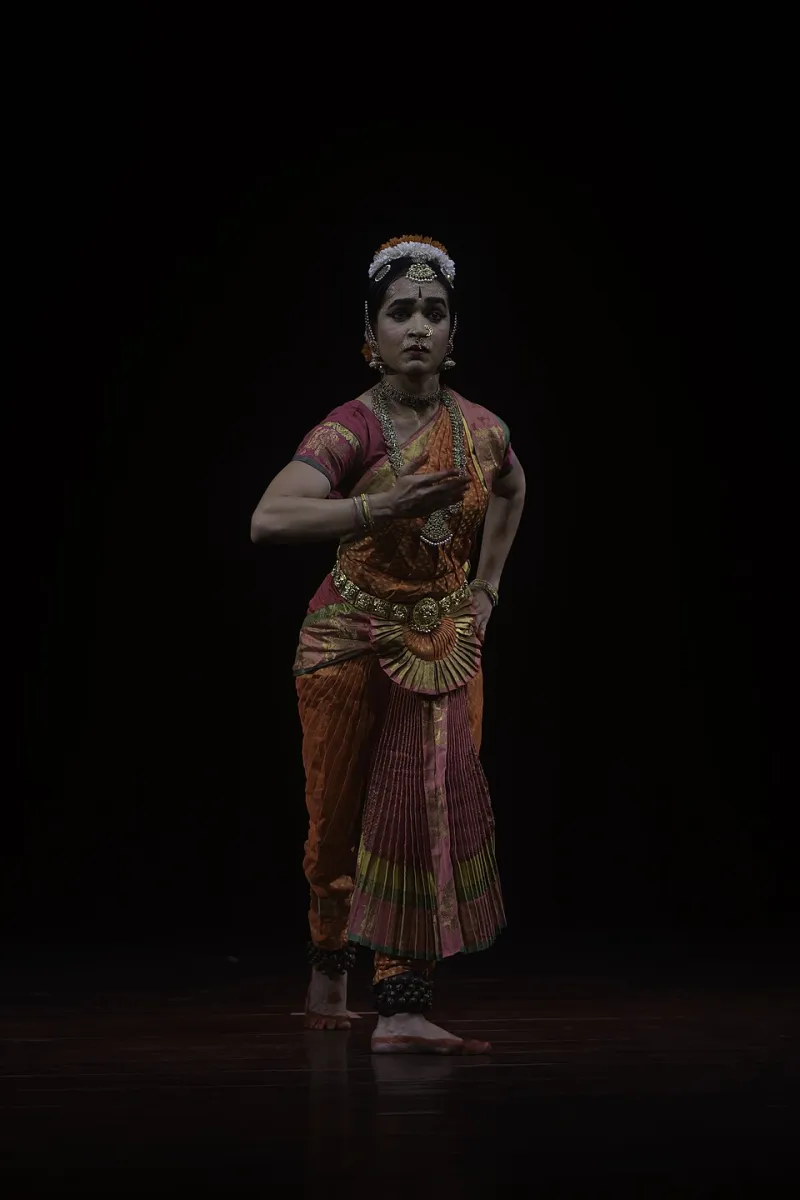
Unbreakable Within: Ancient Indian Teachings That Quiet the American Burnout Crisis
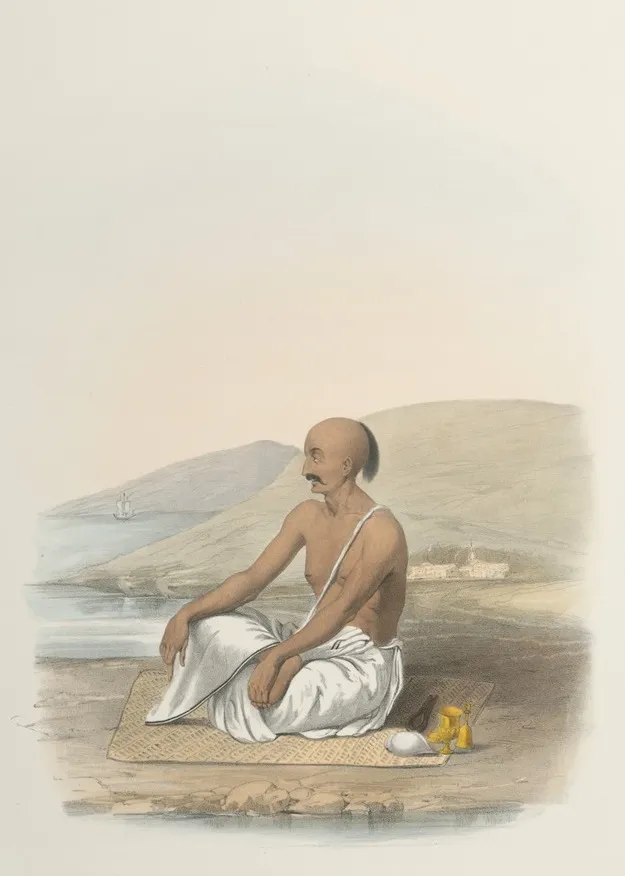
Photo: Belnos, S. C., Mrs., CC0, via Wikimedia Commons
America is tired. According to the American Institute of Stress, roughly 77 percent of the population experiences physical symptoms caused by stress on a regular basis. From the relentless pace of corporate culture to the fractured rhythms of post-pandemic life, burnout has become something of a national condition. Yet while contemporary wellness trends cycle through new solutions—cold plunges, dopamine detoxes, productivity apps—a far older body of knowledge has been quietly offering answers for millennia.
India's spiritual heritage, preserved across thousands of years in sacred texts, oral traditions, and living lineages, offers a remarkably coherent framework for understanding and transcending human suffering. At Gajanan Maharaj, we believe that wisdom does not expire. What the ancient rishis observed about the restless mind remains profoundly relevant to the American professional sitting in traffic on the I-405, or the parent lying awake at 3 a.m. consumed by financial worry.
This is not about adopting a foreign religion or abandoning one's existing beliefs. It is about accessing tools—philosophical, breathwork-based, and contemplative—that have been refined across generations and proven effective long before neuroscience arrived to confirm what practitioners already knew.
The Bhagavad Gita and the Crisis of Identity
Perhaps no text in the Indian spiritual canon speaks more directly to modern anxiety than the Bhagavad Gita. Set on the battlefield of Kurukshetra, the dialogue between the warrior Arjuna and Lord Krishna unfolds at a moment of complete psychological collapse. Arjuna, a capable and accomplished individual, is paralyzed by uncertainty, overwhelmed by competing obligations, and terrified of the consequences of his choices.
If that sounds familiar, it should.
Krishna's response to Arjuna does not dismiss his anguish. Instead, it systematically dismantles the false assumptions causing it. Central among these is the teaching of nishkama karma—action performed without attachment to outcomes. In Chapter Two, Krishna instructs: "You have a right to perform your prescribed duties, but you are not entitled to the fruits of your actions."
For Americans conditioned to measure self-worth through achievement, productivity, and external validation, this teaching strikes at the root of burnout itself. Burnout rarely arises from working hard. It arises from working hard while simultaneously demanding that the results justify the effort, validate the sacrifice, and arrive on schedule. When outcomes disappoint—as they inevitably do—the entire structure of meaning collapses.
The Gita's remedy is not passivity. It is a radical redefinition of engagement: act with full commitment, release the compulsion to control what follows. This single philosophical shift, when genuinely internalized, dissolves the anxiety loop that drives so much of American professional suffering.
Pranayama: The Science of the Breath as Gateway to Calm
Before any philosophical reorientation can take hold, the nervous system must first be brought into a state where learning and reflection are even possible. This is where pranayama—the ancient Indian science of breath regulation—proves immediately practical.
The autonomic nervous system governs our stress response, and breath is one of the few physiological mechanisms through which we can influence it consciously. Modern research published in journals such as Frontiers in Human Neuroscience has confirmed what Indian practitioners understood intuitively: deliberate breath control directly modulates heart rate variability, cortisol levels, and the balance between sympathetic and parasympathetic activation.
Three pranayama techniques are particularly accessible for beginners:
Nadi Shodhana (Alternate Nostril Breathing): Sit comfortably, close the right nostril with the thumb, inhale through the left for four counts. Close the left nostril with the ring finger, release the right, exhale for eight counts. Repeat on the opposite side. Five minutes of this practice measurably reduces acute anxiety and restores a sense of equilibrium.
Bhramari (Humming Bee Breath): Inhale deeply, then exhale while producing a low, steady humming sound with the lips gently closed. The vibration activates the vagus nerve and creates an almost immediate sense of internal stillness. This technique is particularly effective during moments of acute overwhelm.
Sama Vritti (Equal Breathing): Inhale for four counts, exhale for four counts. Deceptively simple, this technique trains the mind to return to rhythm—a foundational skill for anyone prone to racing thoughts or panic.
These are not supplementary wellness add-ons. They are precision instruments for physiological regulation, drawn from a tradition that understood the body-mind relationship with extraordinary sophistication.
Meditation as Restructuring, Not Escape
A common misunderstanding in Western wellness culture frames meditation as a form of mental vacation—a brief reprieve from the noise of daily life. The Indian contemplative tradition holds a considerably more ambitious view. Meditation, in the Vedantic sense, is a systematic process of restructuring one's relationship to thought itself.
The practice of dhyana, as described in Patanjali's Yoga Sutras, is not about emptying the mind. It is about cultivating the capacity to observe mental activity without being consumed by it. The meditator learns to witness thoughts—including anxious ones—without granting them unconditional authority over behavior and emotional state.
For Americans navigating life transitions—career changes, relationship ruptures, geographic relocations, the disorientation of midlife—this observational capacity is transformative. When the internal narrator insists that a particular setback is catastrophic or permanent, the meditative mind has developed the faculty to pause, observe that narrative, and choose not to accept it as absolute truth.
Beginning a consistent practice requires very little. Ten minutes each morning, seated comfortably with eyes closed, attention resting on the natural rhythm of the breath. When the mind wanders—and it will—gently return attention to the breath without self-criticism. The return itself is the practice. Over weeks and months, this cultivates what the tradition calls viveka: discriminative intelligence, the ability to distinguish between what is real and what is merely feared.
Life Transitions and the Teaching of Impermanence
Perhaps the most universally resonant contribution of Indian philosophy to the modern American experience is its sophisticated engagement with impermanence. The concept of anitya—the transient nature of all conditioned phenomena—appears across Hindu, Buddhist, and Jain thought alike. Nothing that arises in time is permanent: relationships, careers, health, youth, certainty itself.
Western culture, with its emphasis on security, accumulation, and the construction of stable identity, tends to treat impermanence as a problem to be solved rather than a truth to be accepted. The resulting friction—between the reality of change and the psychological demand for permanence—generates enormous suffering.
The Indian spiritual response is not resignation. It is what might be called graceful participation: engaging fully with each phase of life while holding it lightly, understanding that its passing does not diminish its value. The autumn leaf is not a failed summer leaf. It is the completion of a cycle.
For Americans facing career uncertainty, aging parents, empty nests, or the quiet grief of dreams deferred, this reframe is not merely comforting—it is liberating.
Beginning the Journey
Gajanan Maharaj has long held that spiritual wisdom belongs to those willing to engage with it sincerely, regardless of background or belief. The practices described here require no conversion, no special equipment, and no prior experience. They require only a genuine willingness to look inward with honesty and patience.
Start with five minutes of Nadi Shodhana each morning. Read a single verse of the Bhagavad Gita each evening and sit with its implications. Establish ten minutes of silent sitting before reaching for the phone. These are small commitments with the capacity to produce profound shifts over time.
America's burnout crisis is real, and it deserves real answers. The ancient wisdom of India, carried forward through living traditions and timeless texts, offers precisely that—not as an exotic curiosity, but as a genuinely tested science of the human spirit.