Hearing What Is Not Said: The Indian Classical Tradition of Sacred Listening and Its Lessons for a Noise-Saturated America
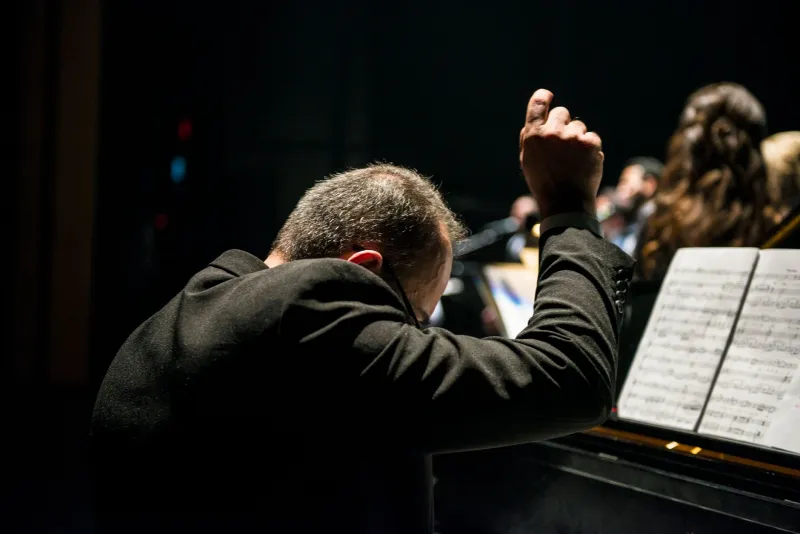
There is a particular kind of silence that falls in a concert hall when a master musician first touches a tanpura string. It is not the silence of absence. It is the silence of arrival — a collective exhale that signals the audience has agreed, at least for this moment, to stop producing and simply receive. In that stillness, something ancient and deeply human is restored.
America has grown uncomfortable with that kind of silence. Across workplaces, social media platforms, spiritual communities, and even dinner tables, the cultural premium is placed squarely on articulation — on having a voice, projecting a brand, occupying space with words. To remain quiet is increasingly interpreted as disengagement, weakness, or irrelevance. Yet the Indian classical traditions, which have quietly informed the spiritual imagination of countless Western seekers for generations, offer a compelling counter-argument: that the highest form of engagement is not speech, but sacred receptivity.
The Raag as a School of Listening
To attend a traditional raag performance is to undergo an education in patience and attention unlike almost anything available in mainstream American culture. A skilled performer does not rush to the melodic core of a composition. Instead, the piece unfolds through an extended alap — an unhurried, improvisational opening in which the musician introduces the raga's characteristic notes one by one, as though introducing a distinguished guest to a room. There is no percussion. There is no urgency. There is only the gradual revelation of a mood, a season, a time of day encoded in ancient musical grammar.
For audiences trained by streaming services and three-minute pop songs, this experience can initially produce restlessness. But those who remain present long enough often report something unexpected: a shift in their inner state. The nervous system begins to settle. The compulsion to evaluate, compare, or respond gives way to something more spacious. The listener stops waiting for the moment they can speak and begins, perhaps for the first time in a long while, to genuinely hear.
This is not accidental. The great musicians of the Hindustani and Carnatic traditions understood that a raga does not merely entertain — it initiates. It asks the listener to become a participant in a shared act of attention. The silence between phrases is not empty; it is structurally meaningful. Learning to inhabit those silences, rather than mentally filling them, is itself a spiritual practice.
What the Guru-Shishya Tradition Knew
Perhaps no institution in Indian classical culture embodies sacred listening more fully than the guru-shishya parampara — the teacher-student lineage that has transmitted knowledge across centuries. At the heart of this relationship is an understanding that learning is not primarily an intellectual transaction. It is a process of deep receptivity in which the student cultivates the interior quietude necessary to receive what the teacher is transmitting, often through example, gesture, or simple presence rather than explicit instruction.
In this tradition, the student's first and most essential discipline is not technique but attention. Before a young musician learns to play a single note correctly, they are expected to sit, watch, and absorb. They observe how the teacher tunes an instrument, how they breathe before a phrase, how they hold stillness between passages. This prolonged, wordless observation is considered foundational — not a preliminary to real learning, but its very beginning.
The implications for American professional and personal life are striking. In a culture where mentorship is often reduced to scheduled one-on-ones and deliverable-based feedback, the guru-shishya model suggests that the most transformative transmission between two people may occur in the spaces where no one is performing. The wisdom that cannot be texted or summarized in a bullet point may be the wisdom most worth having.
The Neuroscience Catches Up
Current research in cognitive and contemplative neuroscience is beginning to affirm what Indian classical traditions have long taught. Studies on what researchers term "deep listening" — sustained, non-evaluative attention to another person or sound — consistently show reductions in cortisol levels, improvements in empathic accuracy, and increased activation of neural networks associated with compassion and social bonding. In contrast, environments characterized by constant verbal output and performance anxiety appear to degrade the very neural pathways that enable genuine human connection.
American workplaces, in particular, have constructed environments optimized for output and self-presentation at the expense of receptive capacity. Open-plan offices, back-to-back video calls, and cultures that reward the loudest voice in the room have collectively produced what organizational psychologists describe as an epidemic of shallow communication — interactions that are frequent but rarely substantive, voluminous but rarely nourishing.
The Indian classical model suggests a different architecture of attention: one in which silence is not a vacuum to be filled but a medium in which meaning becomes perceptible.
Practicing Receptive Silence in Daily Life
Adopting the principles of sacred listening does not require formal musical training or access to a traditional guru. It begins with a reorientation of intention — a decision to enter conversations, relationships, and spiritual practices as a receiver rather than a performer.
In practical terms, this might mean allowing a full breath of silence before responding in a conversation, rather than formulating a reply while the other person is still speaking. It might mean attending a live musical performance — whether Indian classical or otherwise — and deliberately releasing the impulse to photograph, caption, or share it, choosing instead to let the experience remain interior and unmediated.
For those engaged in spiritual community, it might mean valuing the quality of collective silence in a gathering as highly as the quality of collective speech. Many American congregations and wellness communities have become, in effect, performance spaces — places where individuals demonstrate their spiritual development through articulate sharing. Sacred listening traditions invite a different kind of community: one in which the willingness to be genuinely moved by another's experience, without immediately translating that movement into words, becomes its own form of offering.
The Radical Act
In a culture that monetizes attention while eroding the capacity to sustain it, choosing to listen deeply — to a raga, to a mentor, to a friend, to the silence within one's own mind — is not a passive act. It is, in its way, profoundly countercultural.
The Indian classical traditions remind us that receptivity is not the absence of engagement. It is its most refined expression. To truly hear something is to allow it to change you. And in a moment when so much of American public and private life is organized around the desire to be heard rather than the willingness to be changed, that quality of openness may be among the most quietly revolutionary things a person can cultivate.
The tanpura string still vibrates in concert halls across this country. The question is whether we are willing to stop speaking long enough to hear what it is saying.