Seen at Last: How the Ancient Indian Practice of Darshan Can Heal America's Crisis of Invisibility

There is a peculiar grief that has settled over American social life in the digital age—a grief that is difficult to name precisely because it coexists with so much apparent connection. Millions of Americans report chronic loneliness even as their phones buzz with notifications, their feeds overflow with faces, and their inboxes expand without pause. The paradox is not incidental. It is, in many ways, the defining spiritual condition of contemporary life in the United States.
Into this paradox, the ancient Indian concept of darshan arrives not as a curiosity but as a corrective.
What Darshan Actually Means
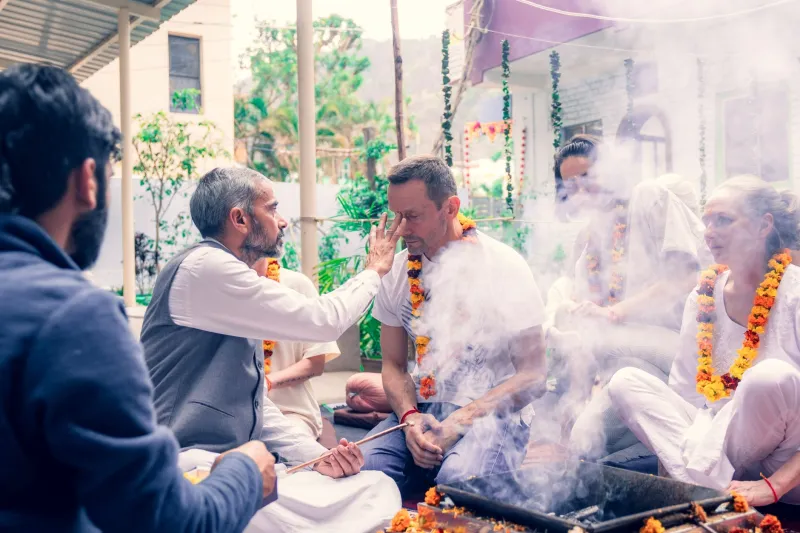
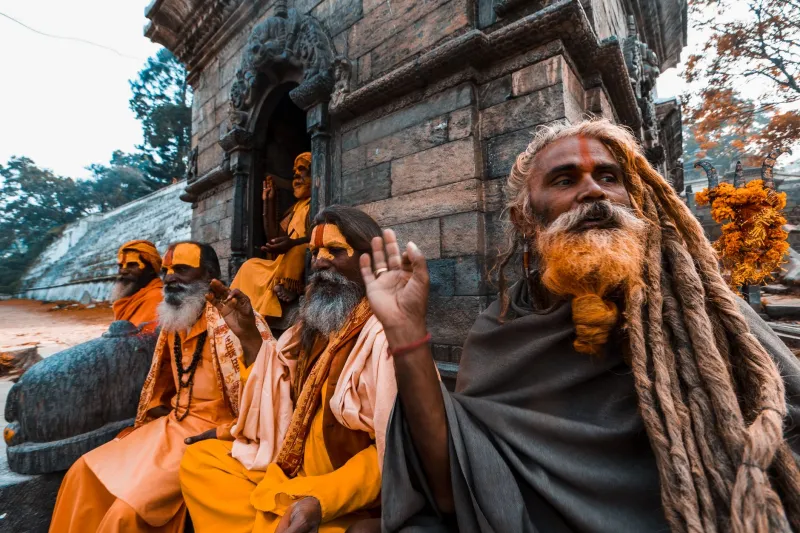
The Sanskrit word darshan is most commonly translated as "auspicious sight" or "the act of seeing a holy person or image." In the devotional traditions of India, to receive darshan is to stand before a deity, a saint, or a sacred object and be met—not merely observed, but genuinely encountered. The exchange is understood to be mutual: the devotee sees, and is simultaneously seen. Neither party is passive. Neither is performing.
This mutuality is what distinguishes darshan from the visual transactions that dominate modern American life. When a person scrolls through a social media feed, they see hundreds of images in a matter of minutes. When they post a photograph of themselves, they may be viewed by thousands. And yet, almost universally, users of these platforms describe the experience as hollow rather than nourishing. The eyes move, but something essential does not travel with them.
In darshan, the gaze is not a glance. It is a sustained, intentional act of recognition—an acknowledgment that the being before you carries within it something worthy of your full and undivided attention. Indian classical and devotional traditions teach that this quality of seeing is itself transformative. The one who looks with genuine reverence is changed by the looking. The one who is seen with genuine reverence is changed by being seen.
The Epidemic Beneath the Surface
The data on American loneliness is by now well-documented. The U.S. Surgeon General's advisory on the loneliness epidemic, released in 2023, noted that approximately half of American adults report measurable levels of loneliness, and that the health consequences of chronic social disconnection rival those of smoking fifteen cigarettes a day. These are not statistics about physical isolation alone. Many of the loneliest Americans are surrounded by people—in offices, in families, in neighborhoods. What they lack is not proximity. It is presence.
Presence, in the sense that Indian wisdom traditions understand it, is not merely the state of being physically nearby. It is the willingness to allow another person's reality to genuinely land within you—to let their joy, their grief, their complexity register rather than slide past. This is precisely what the architecture of digital interaction is not designed to facilitate. Algorithms reward reaction over reflection. Platforms are built for speed, not depth. The result is a culture in which people are perpetually visible and chronically unseen.
Darshan speaks directly to this wound.
Sacred Attention as a Spiritual Discipline
In the temples of India, devotees may wait for hours simply to stand before the image of a deity for a few seconds of direct, unobstructed sight. The waiting is not incidental to the practice; it is part of it. The anticipation prepares the inner eye. By the time the devotee stands before the sacred image, their attention has been gathered, focused, and offered. They are not multitasking. They are not composing a response to something someone else said. They are wholly present to a single encounter.
This quality of gathered attention is itself a form of spiritual discipline, and it is one that American seekers are increasingly hungry for—even when they do not have the vocabulary to describe what they are seeking. The enormous popularity of meditation retreats, silent workshops, and contemplative practices in the United States reflects a collective intuition that something essential has been lost in the acceleration of daily life. What darshan offers is a way of bringing that contemplative quality into relationship itself—not only into solitary practice.
To meet another person with the quality of attention that darshan describes is to treat their presence as something sacred rather than incidental. It is to look at them not as a function, a role, or a reflection of your own needs, but as a being whose inner life is real, deep, and worthy of your most sincere acknowledgment.
Darshan in the Workplace and Community
The implications of this practice extend well beyond the personal sphere. American workplaces are frequently characterized by a peculiar form of institutional invisibility—employees who are evaluated, managed, and optimized but rarely genuinely seen. Research consistently demonstrates that one of the most powerful predictors of employee engagement is the simple experience of feeling recognized by one's colleagues and leaders. Not praised, not rewarded, but recognized—seen as a full human being rather than a unit of productivity.
The principle of darshan offers a framework for understanding why this recognition matters so deeply, and how it might be cultivated more intentionally. A manager who pauses before a meeting to genuinely look at the people in the room—not to assess performance or anticipate problems, but simply to acknowledge their presence—is practicing something functionally similar to what a devotee does at the threshold of a temple. The gesture need not be religious to carry its essential quality. What matters is the intention behind the gaze.
In communities, too, the practice of mutual witnessing has the potential to dissolve the anonymity that breeds alienation. Neighborhood associations, community centers, and civic organizations that create genuine opportunities for members to be seen and heard—not just heard from—tend to generate the kind of social cohesion that policy alone cannot manufacture.
Reclaiming the Gaze
For Americans interested in integrating this principle into daily life, the entry points are surprisingly accessible. They do not require a pilgrimage or a particular religious affiliation. They require only the willingness to slow down the gaze.
Consider the practice of looking at a person—a partner, a colleague, a stranger in a service role—for a full breath before speaking to them. Consider the discipline of setting aside a screen before a meaningful conversation begins. Consider the possibility that the most profound spiritual practice available in any given moment may not be a formal ritual at all, but simply the act of letting another person know, through the quality of your attention, that their existence registers.
In the Indian devotional tradition, the eyes are sometimes called the doors of the soul. Darshan is the practice of keeping those doors open—of refusing the protective closure that modern life so readily encourages. It is an act of courage as much as an act of love.
America does not lack connection. It lacks the kind of connection that darshan describes: mutual, unhurried, and genuinely transformative. The healing that so many Americans are seeking may be closer than any algorithm can suggest—present in the simple, radical act of truly looking, and of allowing oneself to be truly seen.